


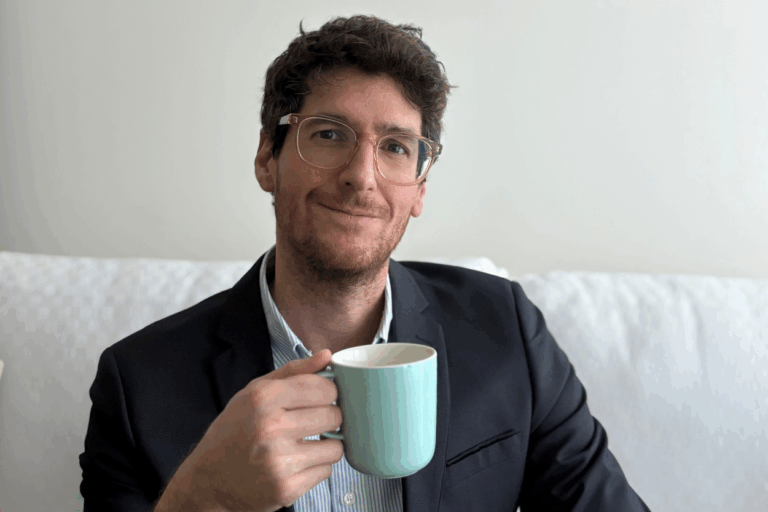
A coffee with Miguel Arias Camacho, Head of Packaging Procurement at Ahorramás.
Empack: Miguel, could you tell us a bit about your experience at Ahorramás and what your day-to-day work within the company is like?
Miguel: I started working in the purchasing department at Ahorramás as a supply planner. This first position was very important for developing my professional career within the company, as it allowed me to learn first-hand how the supply chain works — in other words, to understand all the processes a product goes through, from negotiation to its placement on the shelves.
Currently, I work as an indirect procurement buyer, managing essential indirect purchases for the company. My responsibilities include purchasing internal consumption items such as packaging materials, uniforms, price holders, and store consumables such as trays, bags, and supports that help facilitate the sale of fresh products.
My day-to-day work involves addressing internal needs, identifying suppliers, and ensuring efficient and sustainable purchasing processes. We are talking about purchasing for an internal customer, which is a challenge, as it requires close collaboration with highly qualified professionals, such as store staff, who have extensive experience working directly with customers. They provide valuable input on improving the customer experience and operational optimisation.
Ultimately, my goal is to continue driving efficiency and quality in indirect procurement, contributing to Ahorramás’ growth and innovation.
Empack: After a long professional career in different companies, which projects have been the most challenging, or which ones do you remember most and why?
Miguel: One of my first major challenges was in the energy sector in 2009, working for one of the leading companies in the industry. We experienced a historic turning point in the commercial energy market with the liberalisation of the sector. This opened the market to free competition, allowing any individual or company to choose whichever supplier they wanted. This not only led to the emergence of new energy retailers, but also triggered a battle between the country’s major energy companies. The objective was to develop an efficient commercial strategy to attract potential customers and, equally important, retain the customers we already had.
Another major challenge I faced was during my last stage as a supply planner at Ahorramás, with the arrival of COVID-19 — I believe many colleagues in the retail sector will agree with me.
To give some context, a supply planner’s role is to maintain optimal stock levels at a company’s central distribution platforms, taking into account demand, seasonality and environmental factors, among others.
Faced with uncertainty, large numbers of people flooded into stores. This was a challenge both for us and for our suppliers, as we had to respond to a level of demand that pushed our capacity to the limit. Fortunately, we were able to meet our customers’ needs in the best possible way.
Empack: What do you think are the main advantages of having trade fairs such as Empack for the Food & Beverage industry and for the visibility of research in this specific sector?
Miguel: From my experience in procurement, I have always believed that one of the best ways to learn is to maintain a direct connection with the market and discover new solutions, materials and trends through suppliers. In this sense, trade fairs such as Empack offer a great advantage, as they bring together the main players in the sector in an accessible and specialised environment, facilitating knowledge exchange and the identification of innovation opportunities.
In addition, the Food & Beverage sector is immersed in a European context shaped by environmental projects, carbon footprint reduction plans and improvements in energy efficiency. These goals translate into legislative changes, technological advances and a clear evolution in consumer habits. For procurement professionals, staying informed and anticipating these changes is essential, as the decisions made today have a direct impact on a company’s future competitiveness.
Stores reflect corporate strategy, so it is crucial to offer more sustainable packaging solutions and alternatives that respond both to regulatory requirements and consumer expectations. In this context, speed in adopting new solutions becomes a key differentiator against competitors.
Ultimately, Empack not only helps build new business relationships, but also offers the opportunity to attend talks and conferences that are extremely valuable for understanding the sector’s main challenges, threats and opportunities.
Empack: Looking ahead, what would you like to see implemented in the sector over the next five or ten years in terms of sustainability or innovation?
Miguel: We should not only present an image of a company committed to the environment to customers — we must also put that commitment into practice through the company’s indirect purchasing.
In recent years, sustainability improvements have been driven by new trends and legislation, which is why we are looking for new alternatives to the products used both in stores and in logistics platforms.
I believe one of my main sustainability goals would be to offer exclusively single-material products, in order to achieve more standardised packaging and improve manufacturers’ efficiency and economies of scale. This is also very beneficial for the end customer, as it would allow them to manage waste in an easier, more convenient and more efficient way.
On the other hand, we are closely monitoring the evolution of new compostable packaging and trays, such as PLA (polylactic acid), sugarcane or bagasse. The market offers interesting alternatives, but in my opinion there is still a lot of development needed to improve how these materials perform with certain foods and, equally important, to offer more competitive pricing so that the sector can replace materials that are more harmful to the environment.
Empack: Finally, if you could give advice to your 10-years-ago self, considering the unpredictable changes we have faced in recent years, what would it be?
Miguel: I never imagined I would experience situations such as the pandemic, Filomena, the blockage of the Suez Canal, or the volatility of raw material markets caused by the war in Ukraine.
It is very difficult to think of good advice for someone who is used to a certain level of stability, with few changes. I would simply say: “Go for it.”
Looking back, from a positive perspective, we could say that these situations have presented challenges that have improved our ability to solve problems, prioritise processes and deliver results under tight deadlines. In a way, I believe they have made us stronger. Sometimes we have to face extreme situations in order to step out of our comfort zone, manage our emotions and, why not, make mistakes that we can learn from.
Share this article


Stay informed

A coffee with Juan Carlos Maroto, Co-founder and CMO, Curius AG
Empack: Juan Carlos, to start with, could you tell us a bit about your career and what your day-to-day life is like at the moment?
A coffee with Catalina Cortizo, Quality Packaging Supervisor at Bolton Food
Empack: Catalina, tell us a bit about your experience at Bolton Food and what your day-to-day work looks like within the company. My experience at
The beer that adds ‘with’ to ‘without’.
At Batllegroup, we have been working on branding and packaging for the consumer goods sector for over 30 years, in a context where design has
12 August 2026: The date that will shape the future of packaging in Europe
The packaging industry is facing a key milestone: 12 August 2026, the date on which the European Packaging and Packaging Waste Directive (PPWR) comes into

